Father confesses to killing Wellington
The Curious Incident of the Dog in the Night-TimeFather’s confession to killing Wellington is the decisive reversal in Christopher’s investigation: the person who promised to tell the truth is also the murderer Christopher has been trying to identify. The admission makes the family home feel unsafe to Christopher and sets his departure in motion.
The promise that precedes the admission
After a long silence, Father tells Christopher that he wants him to know he can trust him. He acknowledges that he has not always told the truth, says that keeping the truth is sometimes difficult, and promises to be honest about everything from then on. The promise is immediately tested by the disclosure that follows: Father says plainly that he killed Wellington.
Christopher initially considers whether the statement might be a joke, since he does not understand jokes and knows that people sometimes say things they do not mean. Father asks him to let him explain, but the explanation cannot undo the admission. The scene turns on the distance between Father’s declared intention to rebuild trust and the truth he reveals: honesty arrives only after a serious lie has already shaped Christopher’s understanding of his family.
The account of the killing
Father connects the killing to the period after Christopher’s mother left. He says Eileen Shears had helped the household, visiting often and assisting with cooking and cleaning. He believed that he and Eileen had become close and hoped she might eventually move in with him, or that he might move into her home. In his telling, those hopes proved mistaken, and the two argued repeatedly.
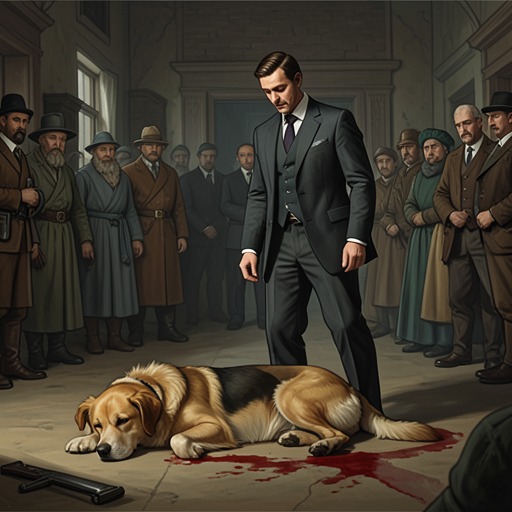
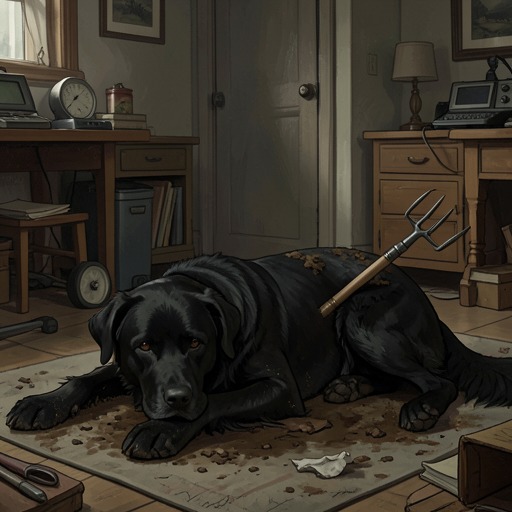
Father describes a particularly bad argument after which Eileen put him out of the house. Wellington was in the garden. Father says that he believed Eileen cared more about the dog than about him and Christopher, and that, in his anger, he killed it. His account presents the act as the culmination of frustration he had been holding in for two years. He apologizes and says he never meant for events to turn out as they did, but the confession establishes that his explanation and remorse do not change what he did.
Christopher’s response and the reversal of trust
Once Father leaves the room, Christopher sits for a long time and looks at the floor. Toby is awake in his cage. Christopher’s conclusion is immediate and practical: because Father murdered Wellington, Christopher thinks Father could murder him too. The earlier assurance to trust him cannot reassure Christopher, because Father has admitted lying about something of great importance.
Christopher therefore decides that he must get out of the house, but not while Father can see him. He waits for Father to fall asleep; the time is 11:16 p.m. The confession thus changes more than the answer to the murder mystery. It changes Christopher’s sense of safety, breaks the trust Father has just tried to claim, and turns a conversation into the cause of an escape.
Narrative significance
The revelation answers the central question of who killed Wellington while exposing the personal conflict behind the crime: Father’s disappointed hopes concerning Eileen and his belief that the dog mattered more to her than he did. The explanation is delivered by Father himself, but its emotional consequence is shown through Christopher’s response rather than resolved by Father’s apology.
The scene’s sharpest contrast is between a promise about the future and a truth about the past. Father says he will now tell Christopher everything; for Christopher, however, the newly disclosed fact confirms that trust has already failed. The confession closes the investigation’s central mystery but opens an immediate danger in Christopher’s mind, making the knowledge that solves one problem the force that drives him away from home.